
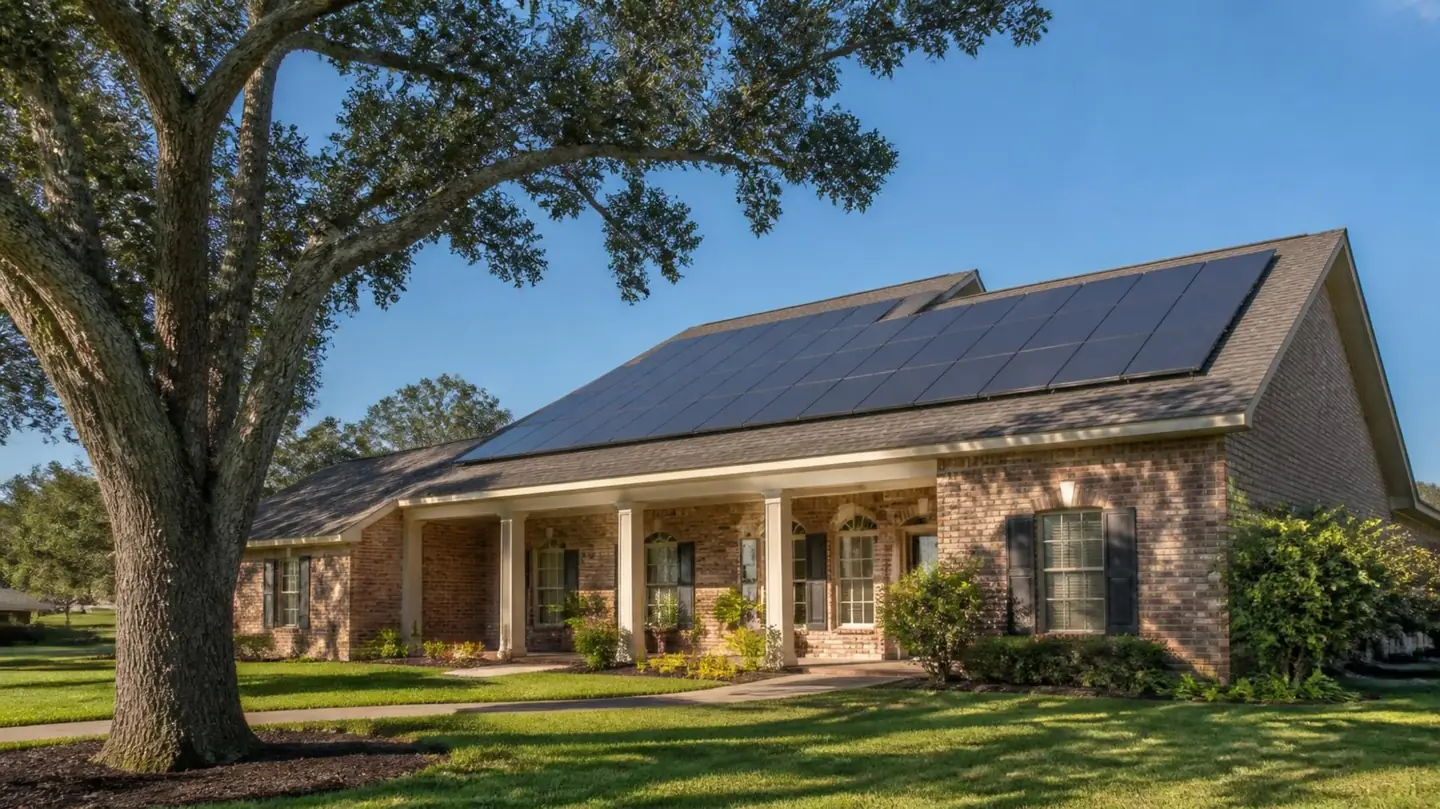
What is Included in a Solar Inspection in Southeast Louisiana?
Your solar panels are a major asset to your home's energy system — but only if they're operating safely and efficiently. During a solar panel inspection, we start with a full photo and data capture of your solar array and related components, then perform a detailed report with an energy output analysis. You'll receive a clear, downloadable PDF report you can share with real estate agents, contractors, or keep for your records. We'll also provide an overall home energy assessment so you can see how your solar system compares to your actual energy needs.
We specialize in delivering third-party solar evaluations so you can move forward confidently. Our thorough inspection procedure covers:
Array and Roof Review
We check the modules, racking, roof penetrations, and overall condition of the system.
Electrical Pathway Check
We analyze conductors, junction and combiner boxes, inverters, disconnects, and grounding bonding of the system.
Thermal Imaging
We use specialized thermal technology to detect hot spots, faulty strings, or performance imbalances.
Labeling and Safety
We ensure correct solar labeling on electrical equipment and conduit for clarity and safety.
Shading and Obstructions
We identify trees, vents, or debris that may reduce panel efficiency.
Energy Assessment
We deliver a baseline energy consumption report that lets you see how your solar system is performing and helps you budget for future energy needs.
Why Solar Panel Evaluations Matter in Southeast Louisiana
Between high winds, heavy rain, and intense sun, a professional solar evaluation in Southeast Louisiana protects your roof, your energy bill, and your resale value.
Roof-mounted systems and leak risk
Most solar systems in Southeast Louisiana are roof-mounted. Every bracket, rail, and fastener is a potential leak point if it wasn't installed correctly or has shifted over time. A local solar inspection in Greater Baton Rouge checks roof attachments, flashing, and sealants so small issues don't turn into interior water damage or rot.
One of the most expensive systems in your home
Your solar array is often right up there with the roof and HVAC in terms of cost. In our heat, humidity, and UV exposure, cracked or loose panels can quietly cut production and shorten system life. A focused solar panel evaluation in Southeast Louisiana verifies that your investment is actually performing.
High winds, storms, and hidden damage
Strong thunderstorms, tropical systems, and the occasional hurricane can loosen mounting hardware, tilt panels, or crack glass with wind-borne debris. Even small glass damage can reduce output and create hot spots. If no one has checked your system since the last big storm, you're guessing — not knowing.
Leased systems and poor maintenance follow-through
Many Louisiana solar systems are leased. Those third-party owned arrays often don't get regular hands-on maintenance, even if the leasing company monitors production remotely. An independent solar evaluation documents the true on-site condition and gives you leverage if something isn't right.
General unfamiliarity with solar in Louisiana
Solar is still less common here than in some other states. Many homeowners, buyers, and even local contractors aren't fully comfortable judging what's normal versus what's a red flag. A professional solar inspection in Southeast Louisiana bridges that gap so you can make informed decisions before buying, selling, or refinancing.
Common Inspection Concern
Many Louisiana solar systems are leased, and third-party owners often rely on remote production monitoring while skipping hands-on maintenance. An independent on-site evaluation is the only way to confirm the physical condition of panels, mounting hardware, and roof penetrations that remote monitoring simply can't see.
Solar System Scenarios We Solve
FAQ: Solar Inspection Questions Answered
Third-Party Solar Inspections for Louisiana Homebuyers and Sellers
Solar adoption in Louisiana has increased significantly in recent years, driven by state incentives, rising utility costs, and growing environmental awareness. As more Baton Rouge-area homes are listed with solar systems attached, buyers and sellers increasingly need independent, unbiased evaluations from inspectors who are not affiliated with any installation or leasing company. That is exactly what a Sprk-certified solar inspection provides.
A solar inspection evaluates far more than whether the panels are producing power. Our certified inspection process documents the physical condition of each module, the integrity of roof penetrations and mounting hardware, the performance of the inverter and electrical pathway, and compliance with safety labeling requirements. Using thermal imaging, we can identify underperforming panels and hot spots that are invisible to the naked eye but indicate degradation or failure.
For real estate transactions, our solar inspection reports are formatted to serve buyers, listing agents, appraisers, and lenders. Whether the system is owned outright or subject to a lease or power purchase agreement, we document the ownership structure, system size, and energy production data so that all parties have the information needed to properly value and transfer the asset. If you are buying or selling a home with solar panels in Baton Rouge or anywhere in Southeast Louisiana, a professional third-party solar evaluation is one of the most important steps in the process.
Areas We Serve
Solar Panel Inspections Across Southeast Louisiana
Buying or selling a home with solar panels? We provide SPRK-certified, third-party solar inspections across the Greater Baton Rouge area and Southeast Louisiana, including East Baton Rouge, West Baton Rouge, Ascension, Livingston, Iberville, Tangipahoa and St. Tammany parishes. Louisiana storms and heat are hard on roof penetrations and panel mounts, so we look at the roof under and around the array, not just the panels.
- Solar inspections in Baton Rouge, LAEast Baton Rouge Parish
- Solar inspections in Prairieville, LAAscension Parish
- Solar inspections in Gonzales, LAAscension Parish
- Solar inspections in Denham Springs, LALivingston Parish
- Solar inspections in West Baton Rouge ParishPort Allen, Brusly & Addis
- Solar inspections in Plaquemine, LAIberville Parish
- Solar inspections in Hammond, LATangipahoa Parish
- Solar inspections in Covington, LASt. Tammany Parish
- Solar inspections in Mandeville, LASt. Tammany Parish
Also serving Zachary, Central, Walker, Port Allen and Ponchatoula, plus the surrounding communities. Call (225) 251-9935 or see all service areas.
Questions a Solar Inspection Helps Answer
An independent evaluation gives buyers, sellers, and owners the factual basis to address the questions that matter most when a home has solar.
Is the system producing as it should: Output is compared to the system's specifications rather than to expectations set by a sales pitch.
Is it owned, leased, or under a power purchase agreement: Ownership structure affects what transfers with the home and what obligations remain, and the inspection documents what is present.
Is it safely installed: Mounting, wiring, grounding, and labeling are evaluated for installation quality and safety concerns.
What might need attention: Physical wear, storm damage, and shading are documented so owners can plan maintenance or repairs.
What to Expect
A general overview of when this service is needed, how it works, and what comes next.
When This Inspection Is Needed
A solar inspection is recommended when buying or selling a home with rooftop solar, or when a homeowner wants an independent assessment of an existing system's condition and safety.
How the Inspection Works
The inspector evaluates the installation — panels, racking, wiring, inverter, and roof attachment — for proper installation, signs of wear, and safety concerns. Available documentation such as ownership and warranty status is reviewed where provided.
What to Have Ready
Provide access to the inverter and any monitoring equipment, and gather available documentation such as the installation contract, warranty, and permit paperwork if you have it on hand.
After the Inspection
The inspector provides a written report describing the system's observed condition and any recommended follow-up. Findings can inform negotiation, warranty claims, or maintenance planning.
Why This Inspection Matters
An independent solar evaluation documents the system's physical condition and output so buyers, sellers, and owners can make decisions based on what is actually installed.
Know what transfers with the home
Documenting ownership structure and system condition clarifies what a buyer is getting, whether the array is owned, leased, or under a power purchase agreement.
Confirm performance
Comparing output to the system's specifications shows whether the array is producing as designed.
Support accurate valuation
Condition and production data help appraisers and lenders value the system appropriately.
Plan maintenance with facts
Documented wear, shading, or installation concerns help owners decide what to address and when.
Related Inspection Services
Services that pair naturally with what you're exploring
Buyer's Home Inspection
When buying a home with solar, pair the system evaluation with a full inspection of the home itself.
Learn morePre-Listing Inspection
Sellers of solar-equipped homes can document the system's condition before listing.
Learn moreNew Construction Inspection
New builds with rooftop solar benefit from a third-party evaluation of both the home and the system.
Learn more